Difference between a 'rip-off' and an 'Homage'
-
baheidstu-351-733122 — 13 years ago(December 14, 2012 03:20 PM)
Brian De Palma is from a certain generation of film-makers who went to film school and learned by watching older, classic films. If George Lucas can get away with adapting the plot of Hidden Fortress and footage of World War 2 dogfight films for Star Wars and not invite hostility, I cannot see why Brian De Palma has to endure such criticisms for emulating the type of films that he likes.
De Palma has been paid homage by younger film-makers himself many times, particularly with Scarface. -
thomas-begen — 11 years ago(October 01, 2014 09:19 PM)
With all due respect to Di Palma, who has shown he is a talented director, I believe a "homage," like a remake, should be more interesting than the original.
"Body Double," for instance, obviously plays with Hitchcock's "Vertigo" and "Rear Window."
The movie is terrible: terrible acting, mediocre directing, and an unconvincing plot. The movie is unbearable to watch.
"Vertigo" is probably one of Hitchcock's most overrated movies. It had a great idea ruined by poor casting, Stewart and Novak, poor execution, and an unsatisfying ending. "Body Double" could have at least tried to do something interesting with the original ideas. Instead it bastardized and trivialized them. -
tobias_681 — 10 years ago(April 21, 2015 01:04 PM)
I think there are some obvious plotdevices which De Palma probably included as a homage: The museum scene (Vertigo), the crossdresser-killer (Psycho), observing a near-killing with binoculars (Rear Window), shift of lead-character (Psycho), prominent shower scenes (Psycho), a chase involving a train (reminiscent of multiple Hitchcock films).
If this is a rip-off it's truly one that isn't sure which movie it is ripping off after all. You can find tons of other influences in there. Flashy nudity, giallolike killings (involving a razorblade as weapen) and dream sequenses weren't exactly part of Hitchcock's repetoir and obviously came from somewhere else. Dressed to Kill has multiple influences but which movie hasn't? If it was to be a ripp-off, it would have to follow a movie much more closely than it does, with all the different stuff it combines, it deviates a lot from the proclaimed "source" and is a movie in it's own right. Brian De Palma and Hitchcock are similar when it comes to characters. They both use clever visual set-ups to present their characters as opposed to dialouge and by those means it's obvious for De Palma to borrow certain story elements for presentation. What he makes of it is entirely different though. Hitchcock's and De Palma's visual style aren't alike and De Palma focusses much more on single scenes (in every movie I've seen by him there are extremely obvious standout scenes which suceed all the others), while Hitchcock focusses more on story (obviously there are standout scenes aswell but still are rooted in the movie).
The explanation at the end is an obvious homage as it is so close to Psycho and feels highly self-aware (the scene didn't actually fit in in my opinion). The musuem scene is probably a hommage aswell because it's so similarily set-up. I wouldn't necessarily dub the other similarities I've listed homages though. De Palma might have added those because he's a huge Hitchcock fan but they don't work like a homage in the movie, but as an element of their own.
You see things; and you say Why? But I dream things that never were and I say Why not? -
pufduff — 10 years ago(August 08, 2015 07:16 PM)
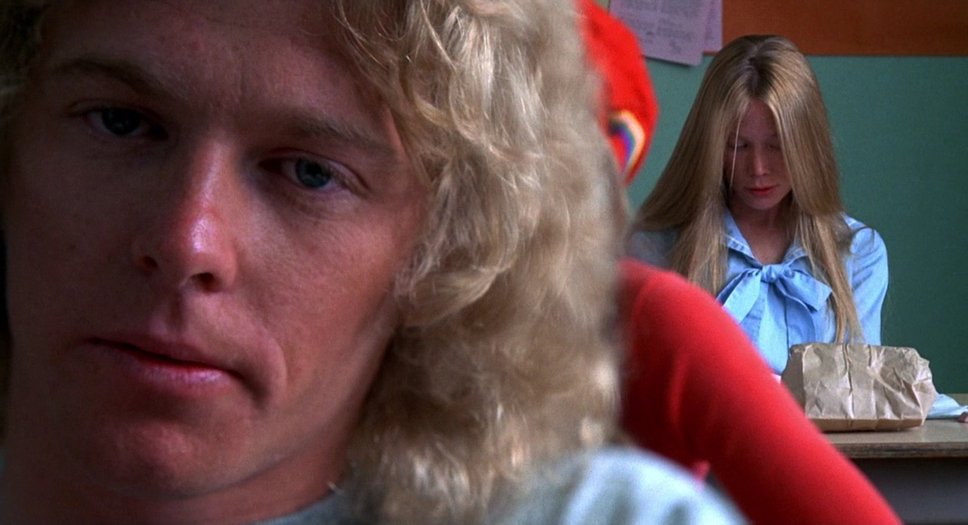
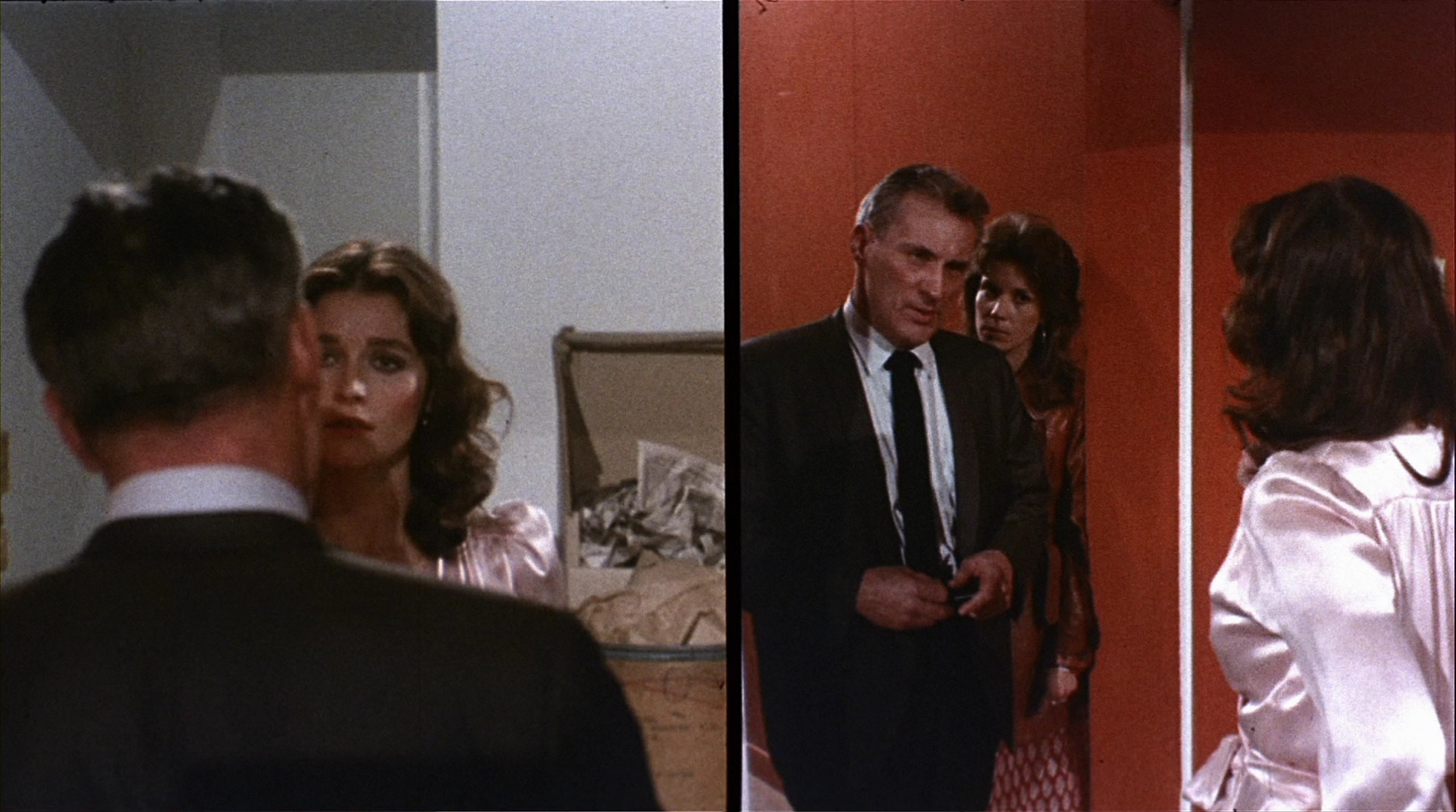
De Palma has stated he idolized Hitchcock, why would he steal his style if it is so obvious and apparent in his films. His films Sisters, Body Double, Dressed To Kill, Blow Out, and Raising Cain are all tributes and odes to Hitchcock. No-one made movies like Hitchcock in the seventies, De Palma was bringing him back. Nothing is identical or legit "copying." Thats like saying Scary Movie is ripping off Scream, or Quentin Tarantino in Kill Bill was ripping off Japanese cinema. DePalma is showing who inspired his style, his angles, his frames, the sequences are actually his own style. The whole "background and foreground are in focus" thing is DePalma's,
http://myscreens.fr/wp-content/uploads/2013/11/Carrie-6.jpg
the split screen thing = De Palma
http://www.mondo-digital.com/sisters3big.jpg
; The slo mo sequences [in Carrie and The Fury], when did Hitchcock ever use slo motion? He has been very inventive with his camera work and choices. -
andyk69 — 10 years ago(September 09, 2015 01:39 AM)
I rewatched after a lot of years DTK yesterday,
I love Hitchcock and I don't see any rippoff of him,
DTK has merit on its own,
what I did think during this rewatching is how Argento's Suspiria
is the elevator scene, amazing and maybe it was just me who
thought this but it was brilliant. -
IAM4UK-2 — 10 years ago(September 20, 2015 08:20 PM)
A primary difference between "rip-off" and "homage" is skill. If the latter work is poorly made, it's a rip-off of that which it's copying. If the latter work is skillfully made, such that it has its own merits, then it is an homage.
-
irishtom99 — 10 years ago(March 21, 2016 12:39 PM)
ive always been on the fence about this..i'm in my mid 60s and followed brian since the beginning..his homage to hitch was well done,but he copied his style and atmosphere for at least 6 films,and thats too much..when he made films without the homage,like untouchables,casualties of war and phantom of the paradise,he was quite a good director
-
AssetsonFire — 10 years ago(March 27, 2016 08:12 AM)
So now we've got that cleared up, what's the difference between an homage and a fromage?
~.~
There were three of us in this marriage
http://www.imdb.com/list/ze4EduNaQ-s/ -
Matthew T. Dalldorf — 7 years ago(October 27, 2018 10:36 PM)
"A rip-off is when a director wants you to think these are his original ideas.
An homage is when the similarities are so hilariously, blatantly obvious (the "reveal" conversation with the psychiatrist, for one) that the director knows he is borrowing the scenes, and HE knows that YOU know."
Am interesting theory but not accurate; the real difference has to do with whether or not critics liked it.